Development

Custom business software development

Custom business software development makes sense when standard tools no longer fit the way your team works. Real workflows, user roles and data come first, so the initial automation solves a defined problem. Features are delivered in stages against acceptance criteria agreed before development. Laravel is the main framework Dev4you.lt uses for custom systems, adapting it to workflows, permissions and connections with other software.Discuss a custom software ideaExplore this service

SERVICE ASSESSMENT

Custom system readiness diagnostic

Assess process, requirements, data and launch readiness from your answers. This is not a code audit or security certification.

AT A GLANCE

A clear starting point

Who it is for

Teams whose workflows are limited by repeated manual work, disconnected spreadsheets or unsuitable standard application features.

What we need to start

Provide workflow examples, user roles and data sources, explaining which task is most important to improve first.

What you receive

Receive staged system development with clear acceptance criteria, defined permissions and agreed handover documentation.

WHO IT IS FOR

When does custom business software development make sense?

Custom business software is built for an organisation’s specific processes. It may cover customer self-service, CRM, reservations, documents or data processing. Unlike a standalone integration, it creates a new working environment and business logic rather than only connecting existing systems.

A custom solution is worth considering when staff repeatedly re-enter information, work depends on disconnected spreadsheets or a standard application requires constant workarounds. We examine a specific task: who starts it, what information is missing, who makes the decision and where errors occur.

Not every problem needs new software. An existing product that meets the core requirements and can be configured appropriately may be the more practical option. We compare custom development with licensing, implementation, migration and long-term support costs. Your team also needs a process owner who can explain current work and decide which changes should be made.

SCOPE

Which business processes can be digitised?

We plan a system as a connected set of user actions. A feature earns its place by helping someone complete a specific task, rather than by having an appealing module name. Several areas can be combined in one project, but the central workflow and its boundaries are established first.

  • CRM and booking functions are assessed within a specific custom software project. Connecting existing systems alone is covered by our integration service.

Which business processes can be digitised?

Customer self-service

A self-service area can present relevant information, accept requests or show progress. We establish what customers may change directly and what needs staff approval. Acceptance checks include preventing access to another customer’s records and confirming that staff changes appear in the correct customer context.

CRM and tasks

Customer and task management follow your sales and service stages. We define ownership, statuses, required information and permitted transitions. The system should make the next action and task history understandable, rather than becoming another place to type information already maintained elsewhere.

Reservations

Booking requires actual availability rules covering time, resources, confirmation and cancellation. We discuss simultaneous requests for the same slot and changes to confirmed bookings. Tests cover conflicts and exceptional cases because displaying a calendar alone does not demonstrate that reservations are handled correctly.

Documents and data

Document workflows identify where information comes from, who approves it and which version is authoritative. Template-based generation, search or export may form part of the project. Representative anonymised examples and correction rules are needed first, so automation does not simply reproduce an inconsistent manual process.

How do we define requirements and acceptance criteria?

Analysis describes user roles, principal scenarios, data fields and connections to other systems. Each important function has an initial state, an action and an expected result. For example, a manager’s approval changes a request’s status, and staff can see who made that decision and when.

You supply workflow examples, exceptions and reports that people actually use. The output is a prioritised requirement list, a defined first stage and verifiable acceptance conditions. Unresolved points remain explicit questions. New requirements are assessed for their effect on data, other functions and the overall scope of work.

How do we plan an MVP and later development?

The first release should complete a useful workflow from beginning to end. That might mean recording a request, assigning it to a responsible person and confirming completion. Additional reporting and convenience features can follow once real usage provides feedback.

A smaller first release does not justify skipping permission checks, data integrity or tests of important actions. Before each stage, we agree its contents and how the result will be accepted. Your team can then assess functioning software and refine priorities without pretending every future requirement can be predicted at the outset.

How we work

Each stage defines the work, your input and the result to check.

01

Analysing processes and users

We review real workflows and exceptions with the people performing them. You provide anonymised examples, producing a shared description of the process, roles and problems.

02

Requirements and the first-phase plan

Requirements are connected to user actions and acceptance conditions. You confirm priorities, giving the first stage clear boundaries and a verifiable outcome.

03

Prototyping and development

We prepare an interface prototype and develop approved functions. Your team checks the working logic, and observations become an agreed list of tasks. Laravel modules are planned around process boundaries so the first release can be extended coherently.

04

Automated and acceptance tests

We run relevant automated checks and acceptance scenarios. Your representatives try their roles, showing how functions and data behave in both successful and unsuccessful cases. We separately test permissions, invalid input and background-job failures.

05

Launch, documentation and further development

We launch the accepted version and hand over documentation and administration. Together we establish support responsibilities and justified priorities for the next stage.

How do we choose architecture, access controls and integrations?

Dev4you.lt primarily builds custom systems with Laravel. The process, data volumes, load and support requirements guide the architecture. We plan authentication, roles, relevant activity logs and backups. Being able to sign in is only one part of access control; permissions must also apply to the records and actions a person can reach.

Integrations specify transferred fields, authoritative sources and behaviour when another system is unavailable. Background processing can support longer-running work where the workflow requires it. The architecture description explains responsibilities and dependencies; infrastructure complexity is not added simply to produce an impressive technology list.

Laravel strengths for real workflows

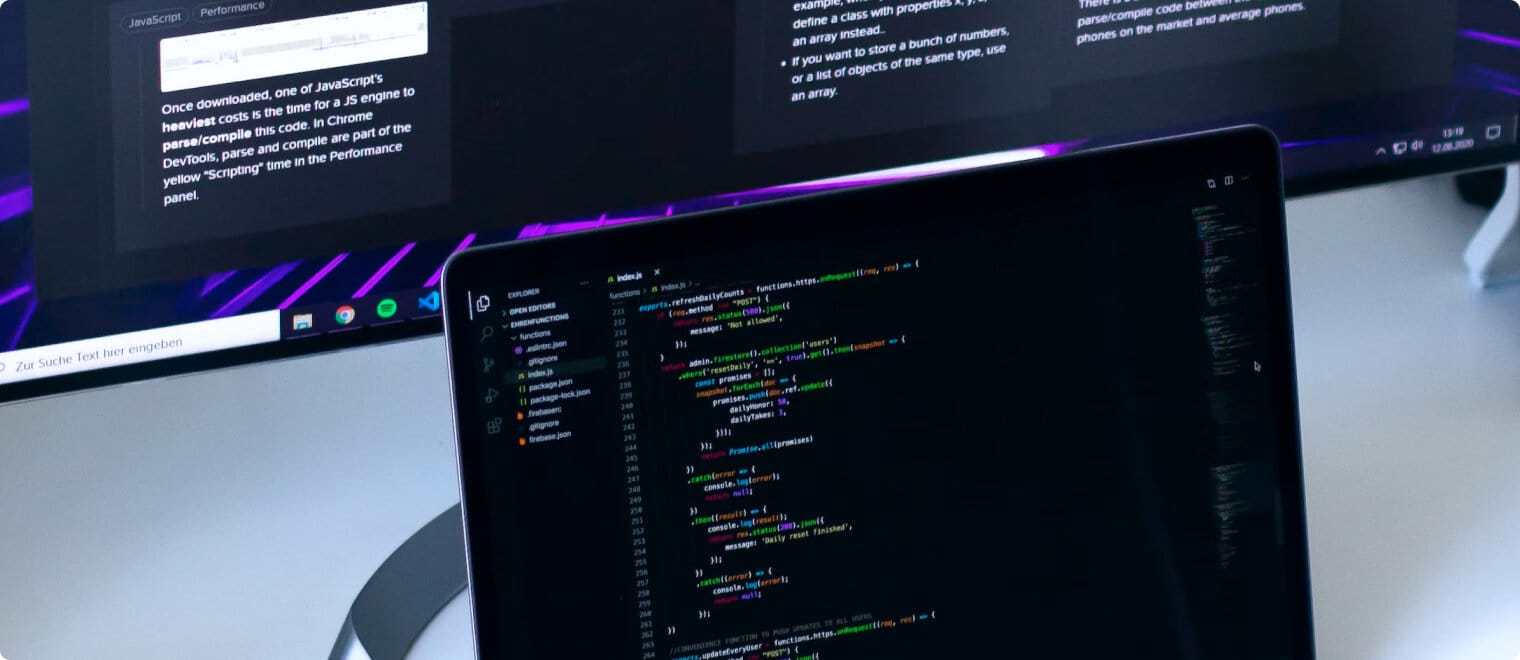
Laravel provides a structured way to separate data, interfaces and business rules. Its authorisation mechanisms can be applied to specific actions, such as viewing a request, approving a price or changing a record’s status. Validation supports consistent checks for forms and API requests. These tools provide a development foundation, while the particular rules still need to be correctly specified, implemented and tested.

Longer imports, report generation and notification delivery can run through a job queue so users do not have to keep one screen open. We also design job status, error reporting and safe retries. Tests for integrations and important processes help catch regressions as the system grows. Laravel does not guarantee speed or security by itself: architecture, code, infrastructure and maintenance matter too.

The Laravel authorisation documentation describes permission-checking mechanisms; your system requirements determine the actual user roles and permitted actions.

How is the finished system handed over and supported?

Before launch, we define the code, documentation, environments and administrative access included in handover. Usage and intellectual property rights are recorded contractually, while third-party components retain their own licence requirements. Data migration needs an agreed source, quality checks and a rollback plan.

At handover, staff try the principal actions associated with their roles and receive an understandable issue-reporting process. Project corrections, ongoing support and new development are separated. A prioritised improvement list records the reasons behind future work, keeping development connected to actual use rather than a growing collection of unrelated ideas.

For a Laravel project, the agreed handover covers deployment and maintenance information: dependencies, environment requirements, database change procedures and background-job operation. We agree who monitors errors, updates the framework and libraries, and checks recovery. Code ownership, repository access and third-party licences are recorded in the contract; an open-source framework does not determine every project right by itself.

Illustrative scenario: a request approval workflow

This is an illustrative scenario. An employee submits a request, a manager approves it or asks for clarification, and an administrator can follow progress. The first stage covers that journey, appropriate permissions and decision history. Additional statistical reports can follow once the core workflow has been tested.

Acceptance checks demonstrate that an unauthorised user cannot approve a request, a return reason reaches its author and a repeated click does not create contradictory states. Your team tries these scenarios before accepting the first release.

What determines the cost?

FactorWhy it mattersInformation we need
Roles and scenariosDifferent workflows and permissions determine feature scope.User groups and essential scenarios.
Data and integrationsInterfaces and data rules affect system complexity.Data sources and connected systems.
Quality and development requirementsTesting and non-functional requirements need assessment.Acceptance criteria, priorities and first-phase boundaries.
FAQ

Frequently asked questions

When a standard product does not fit important processes, creates extensive manual work or lacks essential integrations. Alternatives should be compared before development. A custom solution is not automatically cheaper or better for every task.

Yes. Laravel is the main framework Dev4you.lt uses for custom systems, including portals, workflows, data management and integrations. We adapt its access-control, validation and background-job facilities to the specific rules, and test important scenarios. Support needs also guide the solution: choosing a framework alone does not establish a suitable architecture or deliver the business outcome.

Within this service structure, they are scenarios for custom business software development. The scope of a specific project follows your process rather than a generic CRM or booking label.

Yes. The first phase can implement the most important working part of a process and assess its value. Later features follow actual use, but the initial phase still needs clear testing and acceptance criteria.

Cost depends on user roles, scenarios, data, integrations and non-functional requirements. A more reliable estimate follows a defined scope. Unclear requests and ongoing changes need an agreed management process.

Ownership, usage rights, handover and third-party licences are defined in the agreement. They cannot be established from a service description alone. The client should understand what is delivered and which support terms remain.

Integrations are planned around other systems’ APIs or available data exchange methods. Data sources, authentication, error handling and responsibility for interface changes are agreed.

Not always. Some processes work well with a responsive web interface. A separate iOS and Android solution is assessed against usage, phone features, offline operation and other specific requirements.

LET’S TALK

Discuss a custom software idea

Explain the workflow, user roles and the manual work taking most time. We will assess first-stage boundaries and the information needed to define requirements.

LET’S TALK

Discuss a custom software idea

Explain the workflow, user roles and the manual work taking most time. We will assess first-stage boundaries and the information needed to define requirements.

    Project details (optional)

    Explain the workflow, user roles and the manual work taking most time. We will assess first-stage boundaries and the information needed to define requirements.

    We save your email, name and phone number if provided, and enquiry source for up to 12 months to manage your request. This does not subscribe you to marketing.

    Or contact us directly: +370 680 55297 [email protected]